Ludhiana's Trusted Manufacturer
Precision Machine Tools for Gold & Jewellery
Manufacturing high-quality wire rolling machines, soni presses, and goldsmith machinery — trusted by craftsmen across India.
Manufacturing high-quality wire rolling machines, soni presses, and goldsmith machinery — trusted by craftsmen across India.
Built for durability and accuracy — the workhorse of every goldsmith workshop.
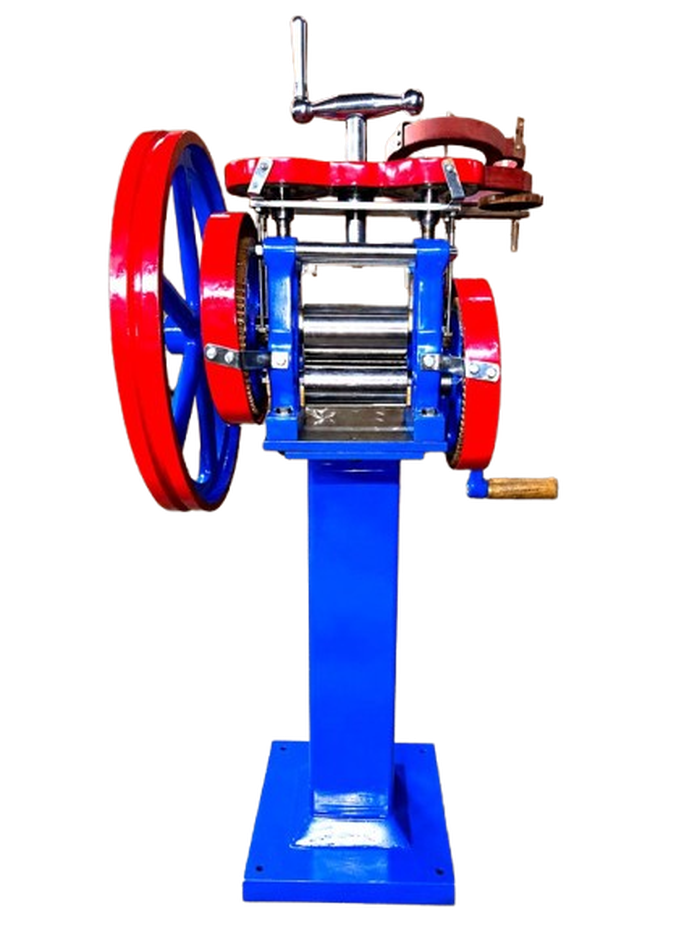
Our wire and sheet rolling machine is built for consistent, high-quality output in goldsmith and jewellery workshops. Heavy-duty cast iron construction ensures years of reliable service. Suitable for both gold and silver — from fine wire to flat sheet.
A streamlined process designed for goldsmiths who value quality and timelines.
Call or WhatsApp us with your machine needs — roller size, material type, and production volume.
We provide a detailed quotation with specifications, delivery timeline, and payment terms.
Your machine is fabricated in our Ludhiana workshop using quality materials and skilled craftsmanship.
Pan-India shipping with loading and unloading guidance. After-sales support always available.
We manufacture and supply a complete range of goldsmith and jewellery machinery from Ludhiana.
High-precision single and double head rolling mills for consistent gold and silver wire production.
Heavy-duty manual and hydraulic presses for stamping, forming, and embossing jewellery components.
Specialized equipment for precision grinding, sizing, and finishing of gold and silver items.
Heavy-duty reinforced safes and secure storage for jewellery workshops and showrooms.
Gas and electric melting furnaces for gold, silver, and other precious metals.
End-to-end consultancy and machinery supply for complete goldsmith production lines.
Automatic and semi-automatic machines for various jewellery chain patterns.
Vibratory polishers, magnetic finishers, and ultrasonic cleaners for jewellery finishing.
V.R. Machine Tools is a Ludhiana-based manufacturer of precision goldsmith machinery. Ludhiana — the industrial hub of Punjab — has long been known for its engineering and manufacturing ecosystem, and we are proud to be part of this legacy.
Under the proprietorship of Mr. Rohit Bhola (S/o Late Sh. Bhoj Raj Bhola), we focus on building machines that are practical, durable, and affordable for the Indian goldsmith. Every machine is fabricated in our workshop using quality cast iron and EN-31 steel — the same standards trusted by workshops across North India.
We understand the daily challenges of a goldsmith's workshop — that is why our machines are designed for low maintenance, easy operation, and consistent output. From a small jewellery workshop in Ludhiana to a large production unit in Mumbai, our machines are trusted for their reliability in precious metal work.
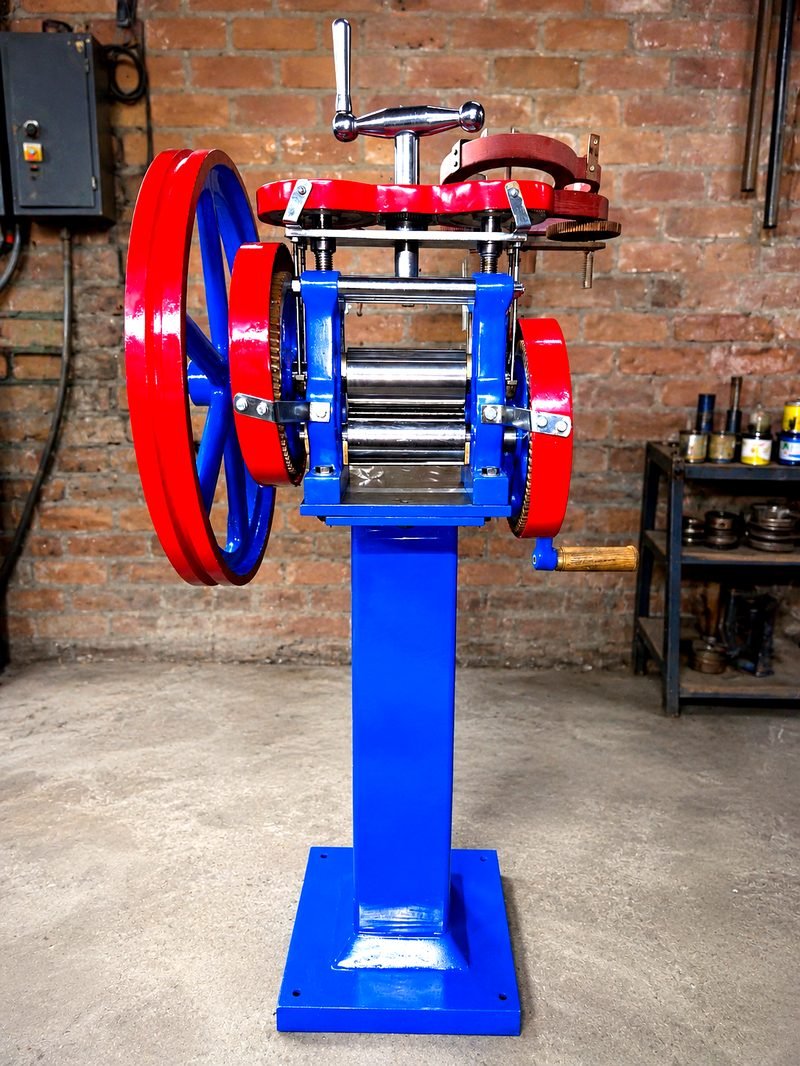
Our machines are engineered for modern jewellery manufacturing.
Every component machined to exact tolerances.
High-grade materials for continuous industrial use.
Personalized service from consultation to after-sales.
Pan India shipping with reliable logistics partners.
Our machinery is trusted across the jewellery manufacturing ecosystem.
Independent goldsmiths and small-scale jewellery workshops across Punjab and North India.
Medium to large-scale production units manufacturing gold and silver jewellery for retail.
Gold refining and bullion processing units requiring heavy-duty rolling and pressing equipment.
In-house repair and custom-making sections attached to retail jewellery showrooms.
ITIs and vocational training centres teaching goldsmith and jewellery-making trades.
Jewellery export houses manufacturing gold and silver products for international markets.
Practical knowledge about goldsmith machinery, materials, maintenance, and buying tips.
Rolling mills, wire drawing machines, hydraulic presses, and melting furnaces — the essential equipment every goldsmith workshop needs.
Gold and jewellery workshops rely on several core machines. A rolling mill reduces metal thickness and shapes wire and sheet. Wire drawing machines pull metal through dies to create precise wire gauges. Hydraulic presses stamp and form components using dies and moulds. Melting furnaces liquefy precious metals for casting or alloying. Each machine serves a specific purpose in the production chain — from raw metal to finished jewellery.
Two hardened steel rollers compress metal to a thinner gauge. Multiple passes with gradually reduced gaps achieve precise final thickness.
A rolling mill uses two hardened steel rollers that rotate in opposite directions. Metal is fed between them and compressed to a thinner gauge. The gap between rollers is adjustable — typically using a screw mechanism — allowing precise control over final thickness. Multiple passes are made, gradually reducing the gap each time. Electric rolling mills use a gearbox-driven motor for consistent torque, while manual mills rely on hand cranking. Double-head mills have rollers on both sides for wire and sheet work without changing setup.
24K is pure but soft. 22K is common in India. 18K balances durability and purity. 14K is hardest. Each behaves differently under the roller.
Gold purity is measured in carats (24K = 99.9% pure). 24K gold is too soft for most jewellery — it bends and scratches easily. 22K (91.6%) is common in Indian jewellery but still relatively soft. 18K (75%) offers a good balance of durability and purity. 14K (58.5%) is harder and more scratch-resistant. When rolling, higher-carat gold requires less force but more care. Alloys like gold-copper (rose gold) and gold-silver (green gold) have different hardness and rolling characteristics.
SWG and Birmingham gauge are standard in India. Wire ranges from 10 SWG (3.25 mm) to 30 SWG (0.315 mm) for fine work.
Jewellery wire and sheet sizes follow standard gauge systems. In India, the SWG (Standard Wire Gauge) and Birmingham Gauge (BG) are common. Typical jewellery wire ranges from 10 SWG (3.25 mm) for heavy bangles to 30 SWG (0.315 mm) for fine filigree. Sheet thickness is usually measured in mm or SWG — gold sheet for stamping is typically 0.5–1.0 mm thick, while sheet for hand fabrication ranges from 0.3–0.8 mm. Always check your roller capacity before purchasing — a 6" × 3" mill can handle most goldsmith work.
Clean rollers after each use, oil bearings weekly, check alignment monthly. A well-maintained mill lasts decades.
Regular maintenance extends machine life significantly. After each use, clean rollers with a soft cloth to remove metal dust and oil residue. Apply light machine oil to roller bearings and gear mechanisms weekly. Check roller alignment monthly — uneven wear indicates misalignment. Inspect bolts and fasteners for tightness, especially the roller adjustment screws. Store the machine in a dry environment to prevent rust. For gearbox-driven mills, check oil levels quarterly. A well-maintained rolling mill can serve reliably for decades.
Roller size, motor power, single vs double head, gearbox type, and build quality — the five key factors before you buy.
When selecting a rolling mill, consider: 1) Roller size — 6"×3" for most goldsmith work, 8"×4" for larger production. 2) Motor power — 3 HP for gold/silver, 5 HP+ for continuous copper/brass work. 3) Single vs double head — double head allows wire and sheet rolling without changeover. 4) Gearbox type — gearbox-driven mills provide consistent torque and speed control. 5) Build quality — cast iron body with EN-31 steel rollers offers the best durability. Always buy from a trusted manufacturer with after-sales support.
From CAD design and 3D printing to casting, rolling, stone setting, and final polishing — the complete jewellery production journey.
Modern jewellery manufacturing follows a structured process. 1) CAD modelling creates a digital blueprint with exact dimensions and tolerances. 2) The design is 3D printed in wax or resin. 3) Investment (lost wax) casting creates the metal form using centrifugal or vacuum casting. 4) Sprues are cut, edges filed, and components assembled. 5) Rolling mills reduce metal to precise sheet or wire gauges. 6) Stones are set using prong, bezel, or pave techniques. 7) Magnetic tumblers and vibratory polishers deliver the final finish. 8) Quality inspection and BIS hallmarking certify purity before delivery.
Melting accounts for 28% of gold loss, polishing 22%, casting 18%. Learn where gold disappears and how to recover it.
Gold loss is a major cost in jewellery manufacturing. Studies show factories experience 8–15% wastage. Melting (28%): oxidation, splash, and crucible adhesion — use induction furnaces with precise temperature control. Polishing (22%): fine dust settles on benches and in cloths — install vacuum collection and refine sweepings. Casting (18%): sprues and incomplete fills — optimise parameters and recycle promptly. Soldering (12%): splatter and evaporation — collect all solder scraps. Handling (10%): dropped pieces — implement job card tracking and clean workstations. With proper systems, wastage can be cut from 10% to 5%, saving significant value monthly.
Induction melts in 2–7 min with minimal loss. Gas is cheaper upfront but has higher oxidation. Electric is compact and portable.
Choosing the right melting furnace affects speed, quality, and cost. Induction furnaces use electromagnetic heating — fast (2–7 min), precise temperature control, minimal oxidation. Available from 1 kg desktop to 250 kg industrial. The professional's choice. Gas furnaces use propane/natural gas — lower initial cost, high temperatures (up to 1315°C), but higher gold loss from oxidation and require ventilation. Electric resistance furnaces use heating elements — clean, quiet, compact. Max 1150°C (adequate for gold/silver, not platinum). Melt time ~5–7 min for 1 kg. Ideal for small workshops and repair shops on a budget.
Contact proprietor Mr. Rohit Bhola directly for quotes and inquiries.
B-31, H. No. 7216, St. No. 7
Near Nanaksar Gurudwara
Guru Arjun Dev Nagar, Samrala Chowk
Ludhiana - 141008